AI is moving to the edge. Here's why, and when.
Shrikant Lokhande · · 9 min read
- Edge AI
- Local AI
- AI Infrastructure
- Mac Studio
- RTX Spark
For the last few years, AI has lived in one place: the data centre. You type a question, it travels to a building full of GPUs, and an answer comes back. That model built the industry. I'm not sure it's the model that keeps it going.
Something changed this year. Apple now sells a desktop with 512GB of memory, built to run very large language models on a desk. NVIDIA has put a 128GB AI superchip into slim Windows laptops. Link four Mac Studios together and you can run a trillion-parameter model in an office, while drawing less power than an electric kettle.
Here's why I think AI is moving to the edge, onto devices we own, and when that shift goes mainstream.
The data-centre model is expensive, and its hardware ages fast
Start with the money. Google, Microsoft, Meta and Amazon plan to spend about $725 billion on capital expenditure in 2026, most of it on AI data centres. That's up 77% from a record $410 billion in 2025. Microsoft says $25 billion of its own budget is simply the rising price of memory and other components.
The AI labs are stretched even further. According to the Financial Times, OpenAI expects to burn $278 billion in cash between 2026 and 2030. It plans to spend about $856 billion on computing power and infrastructure over that period, slightly more than the $840 billion of revenue it expects to earn. The bet is that revenue catches up before the bills do.
Now look at what all that money buys. A frontier AI chip doesn't stay frontier for long. NVIDIA ships a new data-centre architecture roughly every year, and each one makes the last look slow and expensive to run. At NVIDIA's GTC conference in 2025, Jensen Huang called himself the company's “chief revenue destroyer” while talking up Blackwell, joking that there weren't many reasons left to buy the previous Hopper chips.
In their accounts, the hyperscalers spread the cost of these servers over five to six years. Investor Michael Burry argues that hardware bought on a two-to-three-year product cycle shouldn't be depreciated that slowly, and estimates that this understates depreciation by about $176 billion between 2026 and 2028. Amazon has already cut the assumed life of some of its servers from six years to five, pointing to the pace of AI. Old GPUs still work, but they struggle to earn their keep against newer chips that do the same job for far less.
Then there's power and memory. The International Energy Agency expects data centres to use about 945 TWh of electricity by 2030, more than double 2024. And the build-out is soaking up so much of the world's memory supply that IDC doesn't expect meaningful relief for PC makers before the end of 2027.
None of this means the cloud collapses. It means a business model where every question runs through a rented GPU in someone else's building carries a lot of cost and a lot of risk. Every request we move onto hardware we already own takes some of that weight off.
512GB on a desk
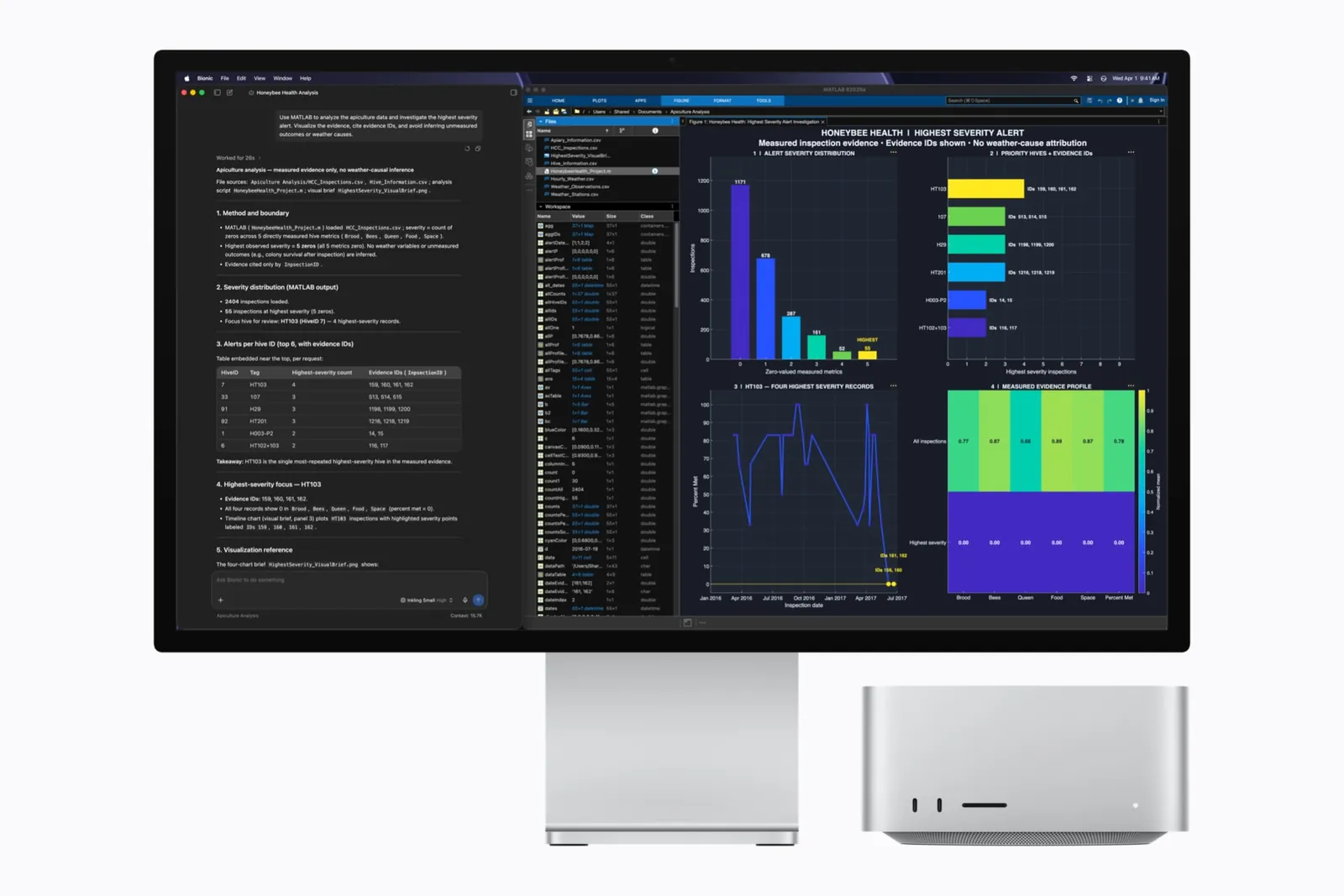
In August, Apple launched a new Mac Studio with the M5 Ultra chip: up to a 36-core CPU, an 80-core GPU with Neural Accelerators in every core, and up to 512GB of unified memory with 1.2TB/s of bandwidth. Apple's pitch is unusually direct. It says you can run massive models entirely on the machine, with no per-token bills and no exposure to rising cloud prices.
Memory is the number that matters for local AI. A model has to sit in memory to run fast, and on Apple silicon the CPU and GPU share one pool, so almost all of that 512GB can hold a model. Apple said the previous 512GB Mac Studio could run models with more than 600 billion parameters entirely in memory.
To go bigger, you link machines. Since macOS 26.2, Macs can pool their memory over Thunderbolt 5 using RDMA, a supercomputer technique that lets one machine read another's memory directly. Last December, Jeff Geerling linked four Mac Studios with 1.5TB of combined memory and ran Kimi K2 Thinking, a one-trillion-parameter open model, at around 30 tokens per second. That's faster than most people read, and each Mac draws under 250 watts. Apple says a cluster of four of the new M5 Ultra machines runs AI inference up to three times faster than one.
It isn't cheap. The 512GB configuration only comes with the top M5 Ultra chip and costs $22,299 with 1TB of storage. It went on sale in late October with a wait of several weeks. The memory crunch shows here too: Apple quietly dropped the 512GB option from the previous Mac Studio in March, most likely because AI servers were soaking up the world's memory supply. But compare it with the alternative. Running a trillion-parameter model in the cloud means renting someone else's GPUs and paying for every token, for as long as you use it.
For a research team, a law firm, a hospital or a government department, a small cluster under a desk that never sends data outside the building is now a realistic option. Two years ago it wasn't.
NVIDIA's answer: RTX Spark
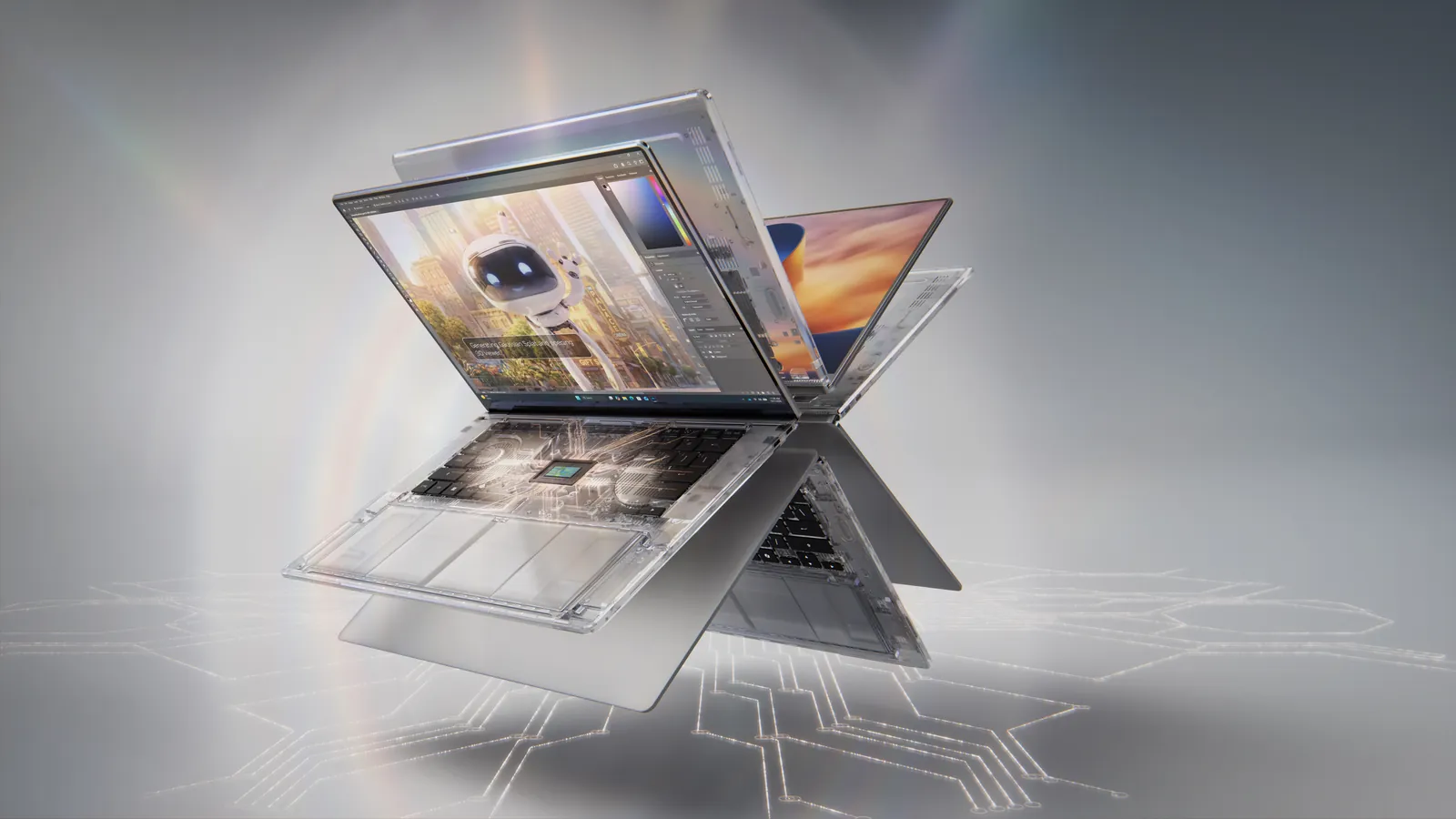
NVIDIA came at the same idea from the PC side. In June it unveiled RTX Spark with Microsoft: a superchip that pairs a Blackwell RTX GPU with 6,144 CUDA cores and a 20-core Grace CPU co-designed with MediaTek, sharing up to 128GB of unified memory, with up to one petaflop of AI performance. NVIDIA says it can run 120-billion-parameter models with up to a million tokens of context. The first laptops went on sale on 16 October from ASUS, Dell, HP, Lenovo, Microsoft and MSI, starting at $2,599.
The more interesting part is the software. RTX Spark is built for personal agents that work across your apps, with new Windows security controls and an NVIDIA runtime called OpenShell. OpenShell can send a request to a local model based on your privacy rules, and disguise personal details in anything that does go to the cloud. Microsoft calls this hybrid intelligence: run locally when it makes sense, reach the cloud when it's needed.
Two different bets
Apple and NVIDIA are aiming at different jobs. Apple is going after the biggest models on a desk. NVIDIA is putting serious AI compute in a laptop, along with CUDA, the software most AI development already runs on.
- Form factor
- Mac Studio (M5 Ultra)Compact desktop
- RTX Spark laptopsLaptops from 14 to 16 inches; small desktops announced
- Unified memory
- Mac Studio (M5 Ultra)Up to 512GB
- RTX Spark laptopsUp to 128GB
- AI compute
- Mac Studio (M5 Ultra)Neural Accelerators in every GPU core, up to 4.3x the M3 Ultra
- RTX Spark laptopsUp to 1 petaflop (FP4)
- Largest model on one machine
- Mac Studio (M5 Ultra)600B+ parameters
- RTX Spark laptopsAbout 120B parameters, with up to 1M tokens of context
- Going bigger
- Mac Studio (M5 Ultra)Link several Macs over Thunderbolt 5 with RDMA
- RTX Spark laptopsServe AI to other PCs on your network
- Software
- Mac Studio (M5 Ultra)macOS, MLX, Core AI
- RTX Spark laptopsWindows, CUDA, TensorRT, OpenShell
- Starting price (US)
- Mac Studio (M5 Ultra)$5,499, or $22,299 with 512GB
- RTX Spark laptops$2,599
- Best for
- Mac Studio (M5 Ultra)Running the largest open models privately
- RTX Spark laptopsAgents, creative work and CUDA development on the go
| Mac Studio (M5 Ultra) | RTX Spark laptops | |
|---|---|---|
| Form factor | Compact desktop | Laptops from 14 to 16 inches; small desktops announced |
| Unified memory | Up to 512GB | Up to 128GB |
| AI compute | Neural Accelerators in every GPU core, up to 4.3x the M3 Ultra | Up to 1 petaflop (FP4) |
| Largest model on one machine | 600B+ parameters | About 120B parameters, with up to 1M tokens of context |
| Going bigger | Link several Macs over Thunderbolt 5 with RDMA | Serve AI to other PCs on your network |
| Software | macOS, MLX, Core AI | Windows, CUDA, TensorRT, OpenShell |
| Starting price (US) | $5,499, or $22,299 with 512GB | $2,599 |
| Best for | Running the largest open models privately | Agents, creative work and CUDA development on the go |
Neither replaces a data centre for training frontier models. But for running them, which is most of what businesses actually do with AI, both are now serious options. And both will get cheaper as memory supply recovers.
When does the shift happen?
Not overnight, and not completely. Deloitte expects inference, the work of running models rather than training them, to make up about two-thirds of all AI compute in 2026. It also expects most of that inference to stay in data centres for now. For this year, I agree. The hardware has arrived. Habits, budgets and software haven't caught up yet.
Here's the timeline I expect.
2026: the hardware tipping point. Trillion-parameter models run on desks, and 128GB laptops are on shelves. Gartner forecast that AI PCs would make up more than half of all PCs shipped this year. The early movers are developers, researchers and teams with strict data rules.
2027: hybrid becomes the default design. IDC expects the memory shortage to last through 2027, so local hardware stays expensive. But new software will be built local-first: sensitive and high-volume work runs on owned devices, and only the hardest problems go to the cloud. OpenShell and Microsoft's hybrid Windows are early versions of that pattern.
2028 to 2030: local becomes normal. As memory supply catches up and smaller models keep improving, running AI on your own hardware stops being a specialist choice. Gartner expects AI PCs to be the norm by 2029. By 2030, I expect most everyday personal and business AI requests to be answered on a device or an on-premises machine, with the cloud doing the training and the heaviest reasoning.
The trigger at each step is the cost of a useful answer. Once a device you already own answers well enough, the cloud has to justify its bill every single time.
What it means for businesses, industries and individuals
Businesses. Sort your AI workloads. Anything sensitive (contracts, HR files, patient notes, financial data) or high-volume (document processing, support drafts, code review) is a candidate for owned hardware. Design for hybrid from day one: a local model by default, with a clear rule for when a request may go to the cloud. And plan AI hardware like you plan laptops, as an asset you own rather than a monthly bill that only grows.
Industries. Regulated and remote sectors gain the most. Government, healthcare, legal and finance get AI without data leaving the building, which matters more every year as data-residency rules tighten. Factories, energy sites, ports and mines get AI that keeps working when the connection doesn't. Retail, museums and live venues get interactive experiences that respond instantly, even offline.
Individuals. Your next laptop may run an assistant that reads your files, drafts your email and operates your apps without sending anything away. Try running a local model now; tools like LM Studio and Ollama make it a ten-minute job. The useful skill for the next few years is knowing what should stay on your device and what can safely leave.
What we'll see next
Personal agents that use your computer. Assistants that work across your apps, files and email, running on your own machine so they can see everything without sharing anything. Windows agents on RTX Spark and Siri's new personal context in macOS 27 point the same way.
Private company brains. Retrieval-augmented generation (RAG) over a company's own documents, running on a small cluster in the office. It's the kind of system I've built for government and industrial clients, and it no longer needs a data centre.
AI appliances. Pre-configured boxes, a few Mac Studios or a deskside NVIDIA machine, sold like a printer or a firewall. Plug it in, load a model, and the whole office has private AI with no per-token bill.
Offline AI in the field. Inspection, maintenance and translation tools for engineers and medics that run on a laptop or a headset with no signal.
Immersive and spatial AI. Smart glasses, headsets, museum guides and interactive installations that see, hear and respond instantly because the model runs in the room, not across the internet. This is the overlap I'm most excited about.
Voice and meeting AI. Dictation, transcription and meeting notes that never leave your laptop. It's what I'm building with Wavren AI.
Physical AI. Robots, drones and vehicles that make decisions on board, where a round trip to the cloud is too slow.
Where this leaves the cloud
The cloud built modern AI, and it will keep training the biggest models. But an industry spending three-quarters of a trillion dollars a year on hardware that can age out in a few years needs the edge as much as the edge needs it. The work is moving to where the data already lives: your desk, your laptop, your building.
In my last post I wrote about Superintelligence Anywhere: intelligence built from the devices around us rather than rented from a distant data centre. This year's hardware is the first real step towards it. So ask which of your AI work really needs someone else's data centre. That list is getting shorter.
Sources
- Apple introduces new Mac Studio with M5 Max and M5 Ultra (opens in a new tab) · Apple Newsroom, 25 August 2026
- Mac Studio with 512GB of RAM now available; starts at $22,299 (opens in a new tab) · Appleosophy, 28 October 2026
- Apple no longer offers M3 Ultra Mac Studio with original highest RAM configuration (opens in a new tab) · 9to5Mac, 5 March 2026
- 1.5 TB of VRAM on Mac Studio: RDMA over Thunderbolt 5 (opens in a new tab) · Jeff Geerling, December 2025
- NVIDIA and Microsoft reinvent Windows PCs for the age of personal AI (opens in a new tab) · NVIDIA Newsroom, 1 June 2026
- NVIDIA RTX Spark PCs available today (opens in a new tab) · NVIDIA Newsroom, 16 October 2026
- Google, Microsoft, Meta and Amazon capex spending to hit $725 billion in 2026 (opens in a new tab) · Tom's Hardware, 30 April 2026
- OpenAI forecasts cash burn near $280 billion by 2030, FT reports (opens in a new tab) · Reuters via The Star, 19 September 2026
- Chief revenue destroyer (opens in a new tab) · TechCrunch, March 2025
- 'Big Short' investor Michael Burry accuses AI hyperscalers of artificially boosting earnings (opens in a new tab) · CNBC, 11 November 2025
- Low-quality hardware, server supply chain kinks, slow AWS AI (opens in a new tab) · The Register, 7 February 2025
- Energy and AI (opens in a new tab) · International Energy Agency, April 2025
- PC market enters volatile territory as memory shortage persists through 2027 (opens in a new tab) · IDC, June 2026
- Deloitte 2026 Technology, Media & Telecommunications Predictions (opens in a new tab) · Deloitte, 18 November 2025
- Gartner says AI PCs will represent 31% of worldwide PC market by the end of 2025 (opens in a new tab) · Gartner, 28 August 2025